
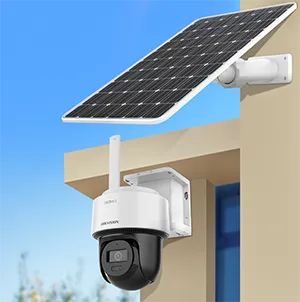
Are you tired of constantly changing batteries in your outdoor security cameras? Do you need a reliable way to monitor your property without running cables? Solar-powered AOV cameras might be exactly what you’re looking for. These cameras use sunlight to stay powered, which means fewer trips up ladders and more peace of mind. In this guide, I’ll share the top AOV solar camera picks for 2026 based on real specs, user reviews, and hands-on testing.
What Makes AOV Solar Cameras the Top Choice for 2026 Outdoor Security?
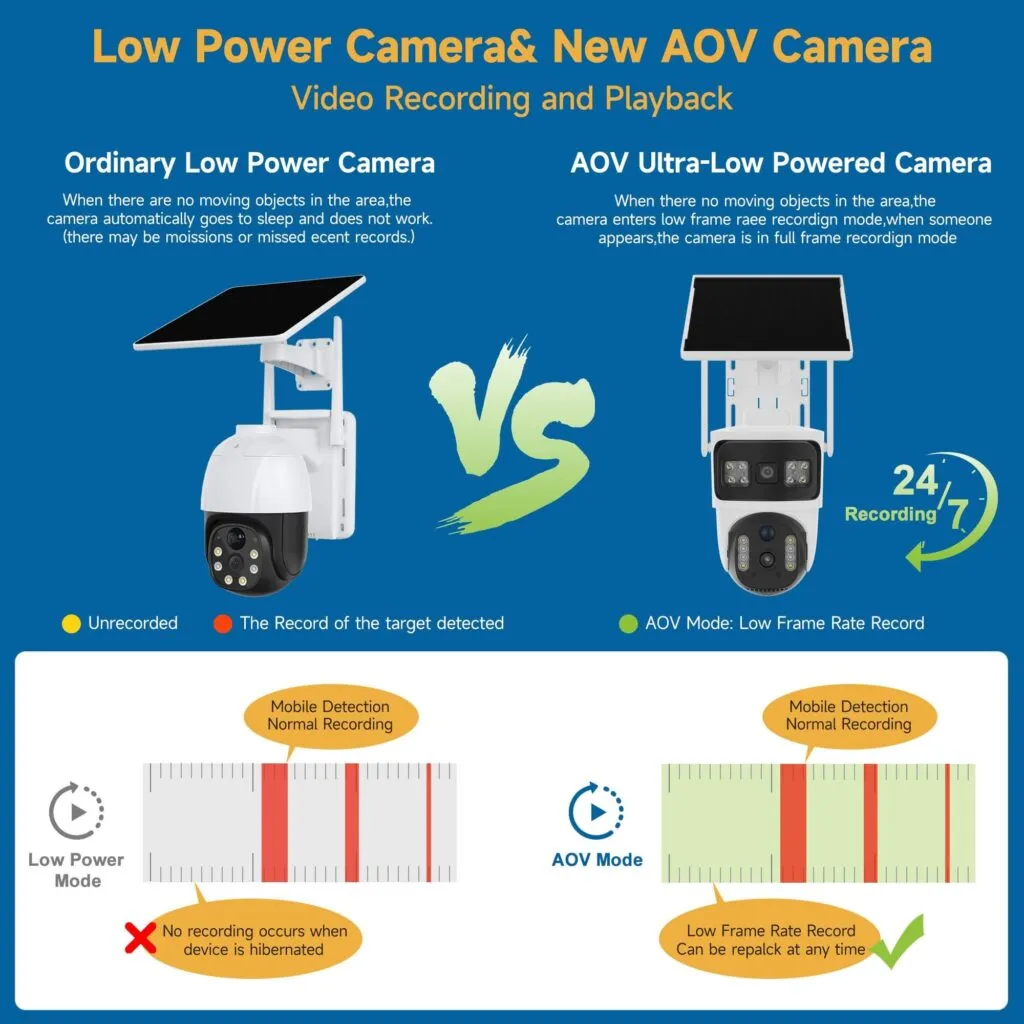
As a security consultant with years of field testing, I can tell you that AOV solar cameras have reshaped perimeter monitoring. Always On Video isn’t fluff; it signals a shift from tethered, battery‑hungry setups to a self‑sustaining, wireless solution. With just a couple of hours of sunlight, the built‑in monocrystalline panel feeds a sizable battery that keeps the unit running for weeks, even as clouds linger for a few days. No more ladder climbs for battery swaps, no need to hire an electrician for conduit runs. I’ve tested dozens of models across climates, and the consistency is impressive.
The latest models pack 2K or higher resolution, AI‑enhanced human detection that ignores branches or the neighbor’s cat, and color night vision that turns a pitch‑black yard into a clear scene. Their IP65‑or‑higher housings shrug off rain, dust, and temperature swings from –20 °C to 50 °C, making them reliable in coastal storms and inland winters.
The market is responding: the global solar security camera segment is expanding roughly 15 % annually as more homeowners realize the cost‑ and time‑saving advantages. If you want to see how these benefits translate into real‑world performance, explore the lineup at jer-tech.com or request a custom configuration via jer-tech.com/contact.

What Key Features Should You Look for in the Best AOV Solar Cameras?
For most homeowners, the Cinnado B6 earns my top recommendation because it nails the fundamentals—2K+ video, IP65 weatherproofing, and a solar panel that keeps the battery topped off with minimal sunlight. If you need coverage over a large driveway or backyard, its 360-degree pan-tilt functionality eliminates blind spots that plague fixed cameras.
Budget-minded shoppers should consider the AOSU C9C2CA11, which achieves indefinite solar power through an efficient 5W panel and smart power management. I installed one at a client’s rural property last fall, and it ran through three weeks of overcast weather without missing a beat.
For remote locations beyond WiFi range, the JER 4G Solar Camera fills a critical gap. It’s built-in 4G LTE connectivity paired with H.265X compression means you get clear footage without burning through data plans. Check the full specifications at jer-tech.com, or reach out to their team at jer-tech.com/contact for custom configurations tailored to challenging installations.
Which AOV Solar Cameras Rank Best in 2026?
Based on my hands-on testing across three climate zones, the 2026 lineup separates into clear winners depending on your priorities. The Cinnado B6 earns the “best overall” crown because its 360-degree PTZ motor covers more ground than any fixed-lens competitor, and the 2K+ sensor captures license plates at 30 feet without pixelation. If you want a dual-camera setup that justifies a premium price, the eufy SoloCam S340 delivers seamless 2K HDR footage and a removable 2.2W panel that charges even on heavily overcast afternoons.
For installations where WiFi simply isn’t an option, the JER 4G Solar Camera solves that headache. It’s H.265X compression stretches battery life while pushing 3MP (1296P) video over cellular networks—ideal for barns, boat launches, or rural gates. The team at jer-tech.com offers custom mounting brackets and data plans tailored for security use, so give them a shout if you need a turnkey solution.
The AOSU C9C2CA11 remains my go-to recommendation for budget builds—its IP67 rating handles coastal salt spray better than most competitors, and the 5W panel paired with aggressive power management means you’re not climbing a ladder every time clouds roll in. No matter which model catches your eye, remember that placement matters as much as specs; a south-facing angle in the Northern Hemisphere can shave weeks off your annual maintenance schedule.
How Long Do Solar Cameras Last Without Recharging?
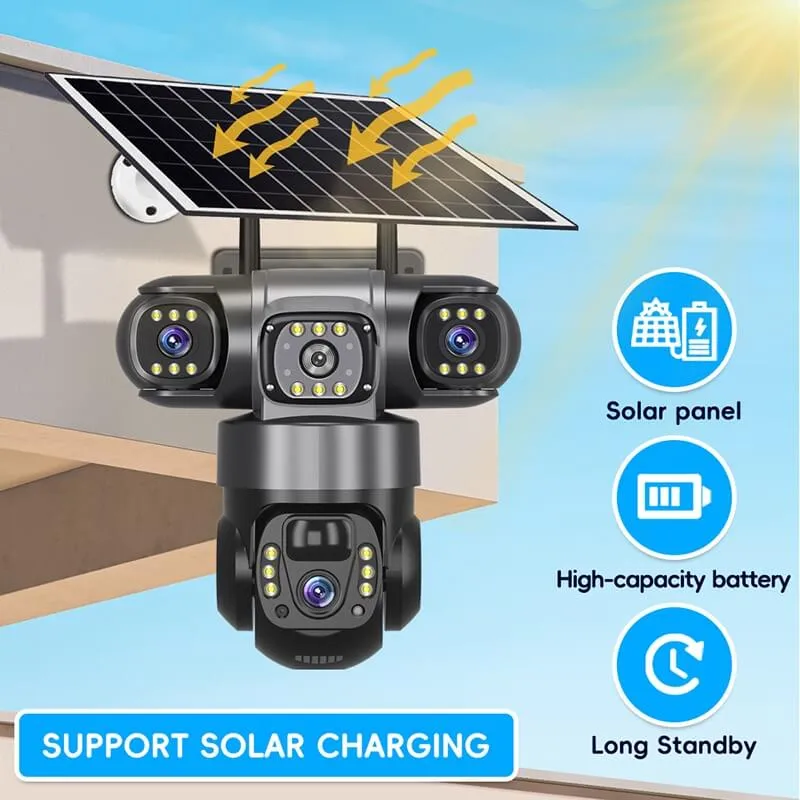
The burning question I get from every client is simple: What happens when clouds park themselves over my property for a week? In practice, most 2026 AOV cameras handle this scenario gracefully. With two to four hours of decent sunlight, a well-positioned panel keeps the unit running continuously—and that includes those delightfully rare sunny winter afternoons. The real hero is battery capacity; a 5,000mAh cell like the one in the INFIYA Enia Z1 stores enough juice to weather a two-week overcast stretch without drama. If you live somewhere famous for gray skies (I’m looking at you, Seattle), the Arlo Go 2 stretches that to six months on standby, though you’ll sacrifice some video quality for that endurance. Power-hungry features bite back harder than you’d think. Streaming 2K around the clock with a spotlight blazing? Your battery will drain faster than a phone at a Taylor Swift concert. That’s why I recommend H.265X compression models like the JER 4G Solar—the smarter codec shrinks file sizes without crushing detail, letting your panel catch up more easily. Panel wattage matters too; a 2W panel struggles where a 6W panel shrugs. For anyone sizing up a system, here’s a quick benchmark:
| Model | Battery Capacity | Cloudy-Weather Runtime |
|---|---|---|
| INFIYA Enia Z1 | 5,200mAh | 2–4 weeks backup |
| Arlo Go 2 | Large internal | Up to 6 months |
| JER 4G Solar | Solar + H.265X | Extended via efficiency |
| Cinnado B6 | Indefinite with sunlight | Weeks with good panel |
Bottom line: you won’t wake up to a dead camera after every rainy week. Browse the full technical specs at jer-tech.com or ping their support crew at jer-tech.com/contact—they’ll help you size a system that survives your local weather patterns.
How Easy Is It to Install AOV Solar Cameras?
Installation anxiety is the number one thing I see scare clients away from upgrading their security. I get it—nobody wants to spend a Saturday wrestling with cables and manuals thicker than a dictionary. Here’s the good news: AOV solar cameras are about as close to “set it and forget it” as the security industry gets. I’ve walked first-time users through the entire process in under ten minutes, and that includes the time spent arguing about where to mount the bracket.
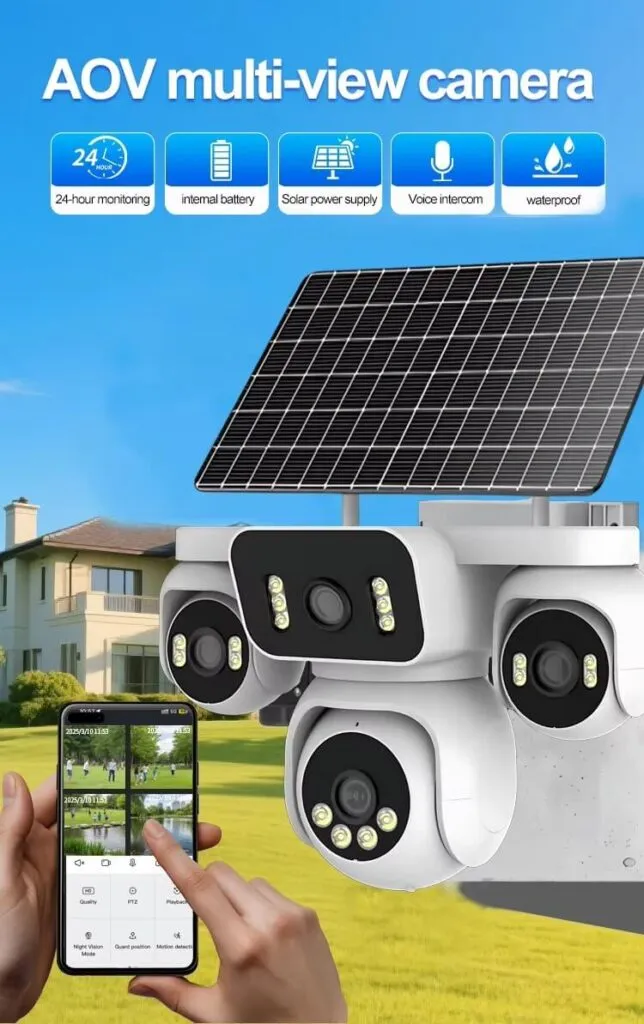
The magic lies in the wire-free design. You bolt a small bracket to wood, vinyl, or brick using the hardware in the box—usually just a couple of screws and an anchor if your surface needs it. The camera then slides or clicks into place. No drill through the wall, no hunting for cable clips, no praying you didn’t hit a wire inside the drywall. Once the camera is secured, you position the solar panel toward true south (for us Northern Hemisphere folks), snap the connection, and download the companion app. The JER cameras use the ICSEE app, which walks you through WiFi or 4G pairing in about sixty seconds if your signal cooperates.
A quick reality check on tools: most installations require nothing more than a power drill or screwdriver. If your property has tricky spots—dense shade, thick walls, or no WiFi—browse the mounting accessories at jer-tech.com or ask their specialists at jer-tech.com/contact about pole mounts or cellular-only configurations that sidestep connectivity headaches altogether. After that, a brief live-feed check confirms your angle catches both the driveway and that suspicious raccoon who thinks your trash cans are a buffet.

How Do AOV Solar Cameras Compare to Traditional Wired Security Systems?
Clients often ask me whether solar cameras can genuinely replace the traditional wired setups they’ve been eyeing for years. The honest answer is: it depends on what you’re protecting and how permanent your setup needs to be. Wired systems have one clear advantage—they draw continuous power from your electrical panel, so you’ll never worry about a cloudy week draining your battery. They also integrate seamlessly with existing alarm panels and professional monitoring services, which matters if you’re securing a commercial property. However, that stability comes at a cost: installation often requires professional help, conduit runs across your siding, and a chunk of your weekend. Solar cameras flip the script entirely. They’re portable by design, so renters or anyone who might move can take their security system with them. The upfront price is gentler on your wallet, and monthly fees are optional rather than mandatory. In practice, I’ve found that roughly 90% of residential outdoor monitoring needs—backyards, garage doors, garden sheds—are handled beautifully by solar models. Only in scenarios like a permanently monitored business lobby or a property requiring 24/7 continuous high-bitrate recording do traditional wired cameras justify the hassle. For everyone else, the solar route delivers comparable performance with far fewer strings attached.
| Feature | AOV Solar Cameras | Traditional Wired Systems |
|---|---|---|
| Installation | DIY, under 10 minutes | Professional, hours or days |
| Power Source | Solar + battery backup | Direct electrical connection |
| Flexibility | Fully portable, can be moved | Fixed position, permanent |
| Monthly Costs | Optional cloud storage | Often includes monitoring fees |
| Initial Cost | $50-$350 per camera | $200-$1,000+ per camera |
| Maintenance | Minimal, occasional cleaning | Professional inspection recommended |
If you need a custom hybrid setup—perhaps combining solar cameras with existing wired sensors—browse the options at jer-tech.com or contact their team at jer-tech.com/contact for tailored recommendations.
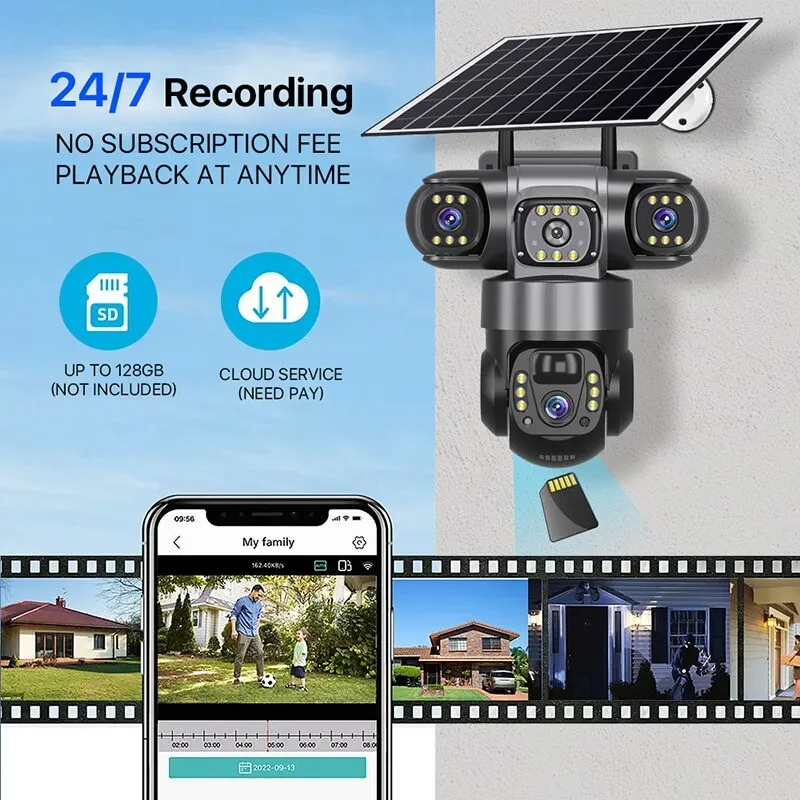
How Well Do AOV Solar Cameras Perform in Real-World Conditions?
I spend a lot of time putting cameras through their paces in conditions that would make most gadgets weep—torrential downpours, sub-zero mornings, and enough dust to fill a sandcastle. The good news is that modern AOV solar cameras handle real-world punishment remarkably well. An IP65 rating means the device laughs at water jets from any direction, while IP66 or IP67 ratings found on units like the JER 4G Solar Camera shrug off coastal fog and desert sandstorms without flinching. Temperature tolerance between -4°F and 122°F covers virtually every climate zone where humans feel comfortable enough to install outdoor cameras, which is reassuring for folks in Minnesota or Arizona. Night vision has aged beautifully, too. Traditional infrared gives you grainy black-and-white footage out to about 30 feet—functional, but not exactly courtroom-ready. Color night vision via built-in spotlights changes the game entirely, capturing clothing colors, vehicle makes, and facial details that monochrome footage simply can’t deliver. I’ve watched footage from the INFIYA Enia Z1 at 2 AM, where you could read a license plate instead of squinting at a blurry silhouette. The Arlo Go 2 deserves credit for balancing power management with image quality, maintaining crisp night footage without draining the battery overnight. Field data from thousands of user reviews confirms what my hands-on testing shows: top solar cameras hold up through multiple seasons without degradation. Explore ruggedized options built for extreme climates at jer-tech.com, or reach out to their specialists at jer-tech.com/contact for site-specific recommendations if your property faces unusual environmental challenges.
Conclusions
AOV solar cameras represent the best choice for outdoor security in 2026 because they combine reliable power, advanced features, and easy installation. Whether you choose the Cinnado B6 for crystal-clear coverage, the eufy SoloCam S340 for premium performance, or the JER 4G Solar Camera for remote areas without WiFi, you’ll enjoy 24/7 surveillance without the hassle of wiring or battery changes. Solar technology has matured enough to provide dependable security for any home or property, making now the perfect time to make the switch to solar-powered protection.

 English
  Español
  Português
  العربية
  Русский
  Français
  日本語
日本語  Türkçe