
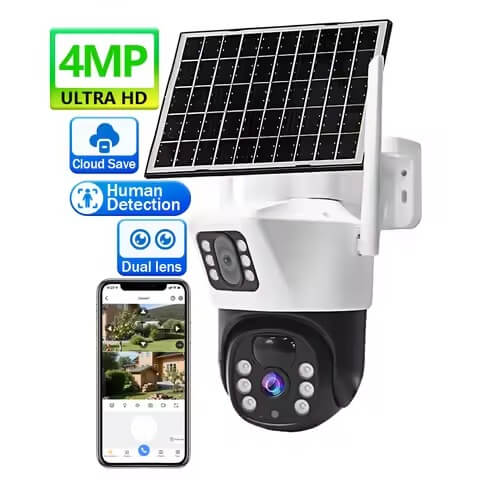
Choosing the right security camera is often confusing because there are so many options available. You want to keep your property safe, but you also need to stick to a budget. In this article, I will help you understand the differences between the two popular choices so you can make the best decision for your home or business. To help you decide quickly, here is a simple comparison of the two camera types. This table shows the main differences you need to know before buying. Now that you have a basic overview, let’s dive into the details of how these cameras work.
Do You Know the Basics of PTZ and Fisheye Cameras?
So, which camera type actually delivers better coverage for your security needs? The answer isn’t as straightforward as you might hope—because it depends entirely on what you’re trying to monitor.
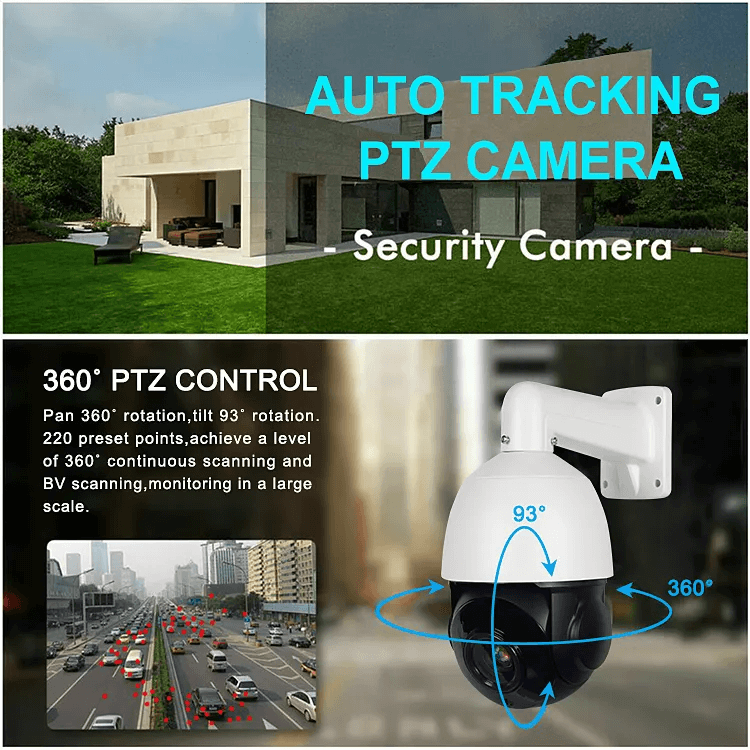
PTZ Camera Coverage:
- Can mechanically pan across 360° horizontal range
- Typical tilt range of 90° to 180°
- Zoom capabilities from 10x to 30x optical zoom
- However, only views one direction at a time
Fisheye Camera Coverage:
- Captures 180° or 360° view simultaneously
- Zero blind spots within the coverage area
- No moving parts means nothing can break mechanically
- Limited effective range due to lens distortion
In my experience consulting for businesses at JER Tech, I’ve seen too many clients choose PTZ cameras, thinking they’ll cover everything—only to realize later that incidents occurred while the camera was pointed elsewhere. Trust me, that’s an awkward conversation to have with a client after a security breach.
The real question becomes: do you need to see everything at once, or do you need to follow specific activity? If you’re unsure which approach suits your facility, reach out through our contact page for a site assessment.
| Coverage Factor | PTZ Camera | Fisheye Camera |
|---|---|---|
| Simultaneous View | Single direction | Full panoramic |
| Blind Spots | Possible when moving | None within range |
| Effective Range | Long-range with zoom | Short to medium range |

How Do Coverage Capabilities Compare?
Real-world coverage decisions come down to practical application. Fisheye cameras dominate in enclosed spaces—retail stores, lobbies, server rooms—where you need every angle captured simultaneously. I installed one fisheye in a boutique that replaced four traditional cameras; the owner was stunned by the coverage improvement.
Ideal Fisheye Applications:
- Retail floors under 3,000 square feet
- Office lobbies and reception areas
- Server rooms and storage facilities
PTZ cameras earn their keep in expansive environments. Think parking structures, warehouse perimeters, or large outdoor lots where tracking movement across distances matters. The trade-off? A PTZ only records what it’s currently facing. I’ve reviewed footage where theft occurred while the camera was panning elsewhere—awkward.
At JER Tech, we match camera type to environment. Small, enclosed spaces benefit from fisheye. Large areas requiring active tracking demand PTZ.
| Space Type | Recommended Camera |
|---|---|
| Enclosed rooms | Fisheye |
| Parking lots | PTZ |
| Warehouses | Both combined |
Need personalized guidance? Visit our contact page for expert assistance.
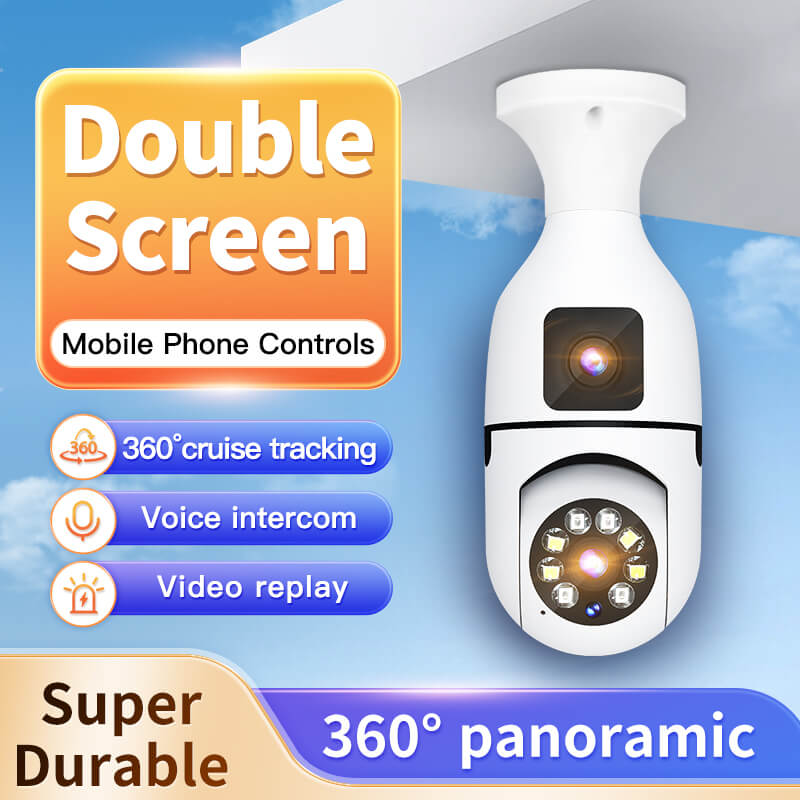
What Are the Key Pros and Cons?
Every camera technology involves trade-offs. After installing hundreds of systems through JER Tech, I’ve learned that understanding these compromises up front saves considerable frustration later.
PTZ Camera Strengths and Weaknesses:
- Pro: Optical zoom captures fine details like license plates from a distance
- Pro: Active tracking follows subjects across large areas
- Con: Motors and gears wear out—typically 5-7 year lifespan
- Con: Only records what it faces at any given moment
Fisheye Camera Strengths and Weaknesses:
- Pro: Zero moving parts means exceptional long-term reliability
- Pro: Captures everything simultaneously without blind spots
- Con: Digital zoom rapidly loses clarity and detail
- Con: Dewarping software is required for natural viewing angles
| Factor | PTZ Camera | Fisheye Camera |
|---|---|---|
| Detail at distance | Excellent | Limited |
| Mechanical reliability | Moderate | Excellent |
| Coverage consistency | Variable | Constant |
Your choice ultimately depends on whether you prioritize capturing fine details or guaranteeing complete coverage. Still uncertain? Visit our contact page for guidance tailored to your specific requirements.

Where Do These Cameras Shine in Real Life?
Real-world application scenarios reveal where each camera type truly earns its keep. PTZ cameras dominate expansive environments—airport perimeters, stadium grounds, industrial complexes, and large parking facilities where security personnel need to track subjects across considerable distances.
Best PTZ Applications:
- Parking structures and large lots
- Airport tarmacs and runways
- Stadium and event venue perimeters
- Industrial facility grounds
Fisheye cameras excel indoors. Retail stores, conference rooms, bank lobbies, and server rooms benefit from their complete coverage without blind spots. One client at JER Tech replaced six traditional dome cameras with two fisheye units in their showroom—same coverage, cleaner installation, lower cost.
Best Fisheye Applications:
- Retail stores and showrooms
- Conference and meeting rooms
- Bank lobbies and branch offices
- Data centers and server rooms
| Environment | Recommended Camera |
|---|---|
| Large outdoor areas | PTZ |
| Indoor spaces under 5,000 sq ft | Fisheye |
| Multi-purpose facilities | Combined approach |
Many facilities combine both types strategically—fisheye for overview coverage, PTZ for detail tracking. Our contact page offers consultation for custom solutions.
Is Cost a Major Factor in Your Decision?
Budget considerations often determine which camera system ends up on your property. PTZ cameras typically demand higher initial investment—quality models range from $800 to $3,000+, depending on zoom capabilities and features. The mechanical complexity that enables their impressive movement also creates long-term maintenance requirements.
PTZ Cost Factors:
- Higher upfront equipment costs
- Motor and gear maintenance over time
- Professional installation often required
- Potential repair costs within 5-7 years
Fisheye cameras present a more economical alternative. Without motors, gears, or moving components, there’s simply less that can fail. Many quality fisheye options cost between $200 and $600—significantly less than their PTZ counterparts. For small businesses watching every dollar, this difference matters.
| Cost Factor | PTZ Camera | Fisheye Camera |
|---|---|---|
| Initial investment | $800-$3,000+ | $200-$600 |
| Maintenance needs | Moderate to high | Minimal |
| Expected lifespan | 5-7 years | 8-10+ years |
The PTZ market exceeded $1 billion in 2022, proving that organizations value those advanced capabilities. But value isn’t always about spending more. At JER Tech, we help clients identify where PTZ investment makes sense versus where fisheye delivers equal results for less. Our contact page connects you with budget-conscious solutions.

Which Camera Should You Choose for Your Property?
Your final decision should hinge on specific security objectives rather than price tags or brand names. I’ve watched too many clients purchase expensive PTZ cameras for small office spaces—complete overkill. Others try covering warehouse perimeters with fisheye cameras, only to realize subjects at a distance become unrecognizable blurs.
Choose PTZ Cameras If:
- You manage large outdoor areas or parking facilities
- Active tracking of moving subjects is essential
- License plate recognition or facial detail matters
- Trained security staff can operate live controls
Choose Fisheye Cameras If:
- Covering indoor spaces under 5,000 square feet
- Zero blind spots take priority over zoom detail
- Budget constraints influence purchasing decisions
- Set-and-forget installation appeals to your operations
| Your Priority | Recommended Choice |
|---|---|
| Detail at distance | PTZ Camera |
| Complete coverage | Fisheye Camera |
| Lower total cost | Fisheye Camera |
Shenzhen JER Technology Co., Ltd offers both camera types with over 15 years of manufacturing expertise. Their factory-direct pricing eliminates unnecessary markups. Visit JER Tech to explore options, or reach out through the contact page for personalized recommendations.
Conclusions
Deciding between PTZ and Fisheye cameras does not have to be hard. You just need to know what you want to see. If you need to zoom in on details from far away, choose a PTZ. If you want to see everything at once in a room, choose a Fisheye. Both are great tools for keeping your property safe. Take your time, review your needs, and pick the one that gives you peace of mind.

 English
  Español
  Português
  العربية
  Русский
  Français
  日本語
日本語  Türkçe